
Keeping fuel delivery reliable through winter…
… what really makes the difference.
Winter reliability is an operational art as much as a science. For experienced tanker operators, distributors, and terminal teams, cold-weather performance is less about simplistic advice and more about understanding why fuels behave poorly at low temperatures - and which interventions genuinely change the outcome.
How cold-flow issues really work
Fuel specifications such as the Cold Filter Plugging Point (CFPP) are familiar benchmarks. For UK winter diesel under BS 2869, the CFPP must be no higher than −12 °C, reflecting the lowest temperature at which fuel will still pass through a standard filter under defined test conditions.
In practice, real-world performance often varies. Modern diesel systems can experience operability issues several degrees above CFPP, depending on filter design, location, and fuel system architecture.
The underlying mechanism is wax crystallisation. As temperatures fall, straight-chain paraffins in middle distillate fuels begin to crystallise. Without control, these waxes form large, plate-like structures that accumulate rapidly on filters and restrict flow - sometimes before CFPP limits are technically reached.
Cold-flow improver additives intervene at the point of crystal formation. By attaching to active growth sites, they modify wax morphology so that many smaller, needle-like crystals form instead of a few large plates. This produces a more permeable filter cake, allowing fuel to continue flowing and extending usable low-temperature operability by several degrees.
For terminals, where fuel may cool overnight or during transit, relatively small changes in wax behaviour can determine whether delivery continues smoothly or is disrupted by filter blockage and downtime.
Terminal handling: an often-overlooked constraint
While cold-flow chemistry is well understood, the physical handling of CFPP improvers is becoming an increasingly important operational consideration.
Traditional cold-flow improver formulations can be highly viscous or semi-solid at low temperatures, often requiring heated storage, heated transfer lines, or on-site warming before offloading. Not all terminals have heating capability, and even when it is available, heating adds complexity, time, and energy demand during peak winter periods.
This creates a practical challenge: additives intended to improve winter operability can themselves become difficult to handle in cold conditions.
Modern cold-flow solutions have addressed this by remaining pumpable and offloadable without heating, even at low ambient temperatures. These formulations retain effective wax-modifying performance while significantly simplifying terminal logistics. Easier offloading reduces delays, avoids temporary heating measures, and supports consistent dosing during periods of highest demand.
Implications for hauliers and fleet operators
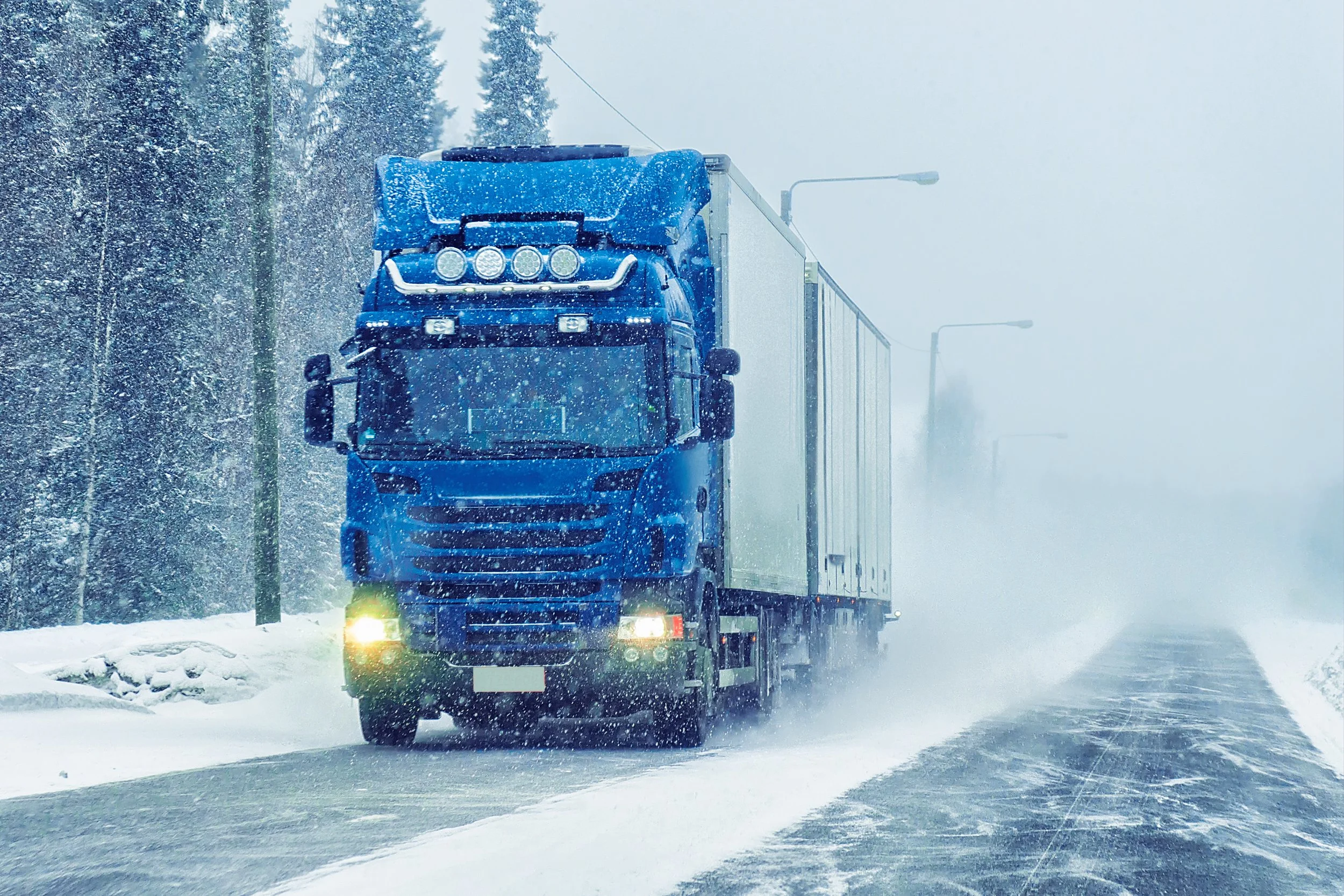
For hauliers and fleet operators, low-temperature fuel behaviour is an operational reliability issue rather than a simple compliance exercise. Vehicles immobilised by filter blockage or restricted fuel flow can halt time-critical logistics, increase unplanned maintenance, and compromise service-level agreements.
This risk is amplified by winter operating patterns. Overnight depot parking allows fuel to cool and stabilise in tanks and lines, often reaching temperatures below daytime ambient. During morning start-up, any wax precipitation that has occurred can overwhelm filtration systems well before CFPP thresholds are reached.
Expert perspective
Tammy Coates, Business Manager – Fuel Additives at SBZ Corporation, explains:
“What distinguishes resilient winter fuel behaviour is a combination of cold-flow modification, chemical stability, and practical handling. Cold-flow additives don’t just delay wax formation - they change how wax forms, reducing the likelihood of sudden filter clogging. At the same time, additives must remain usable at terminals, where heating capability isn’t always available. These mechanisms matter most in real storage and delivery conditions, where temperatures and residence times vary physically and thermally.”
A whole-supply-chain approach
Winter reliability spans the entire supply chain. Terminals control fuel quality and additive application at scale; distributors ensure it remains conditioned during transit; hauliers and fleet managers depend on that performance at the point of use.
When cold-flow modification, chemical stability, and additive handling characteristics are aligned, the result is fewer winter stoppages, more predictable delivery schedules, and greater resilience across the logistics network - even under sustained cold-weather pressure.
Why pumpability matters for cold-flow improvers
Cold-flow improvers are often supplied at high active concentrations, which can increase viscosity at low temperatures. If an additive cannot be pumped or offloaded easily, dosing consistency can suffer - precisely when accurate treatment is most critical.
Pumpable, low-temperature-stable formulations help ensure reliable handling, accurate dosing, and uninterrupted winter operations at terminals without relying on additional heating infrastructure.